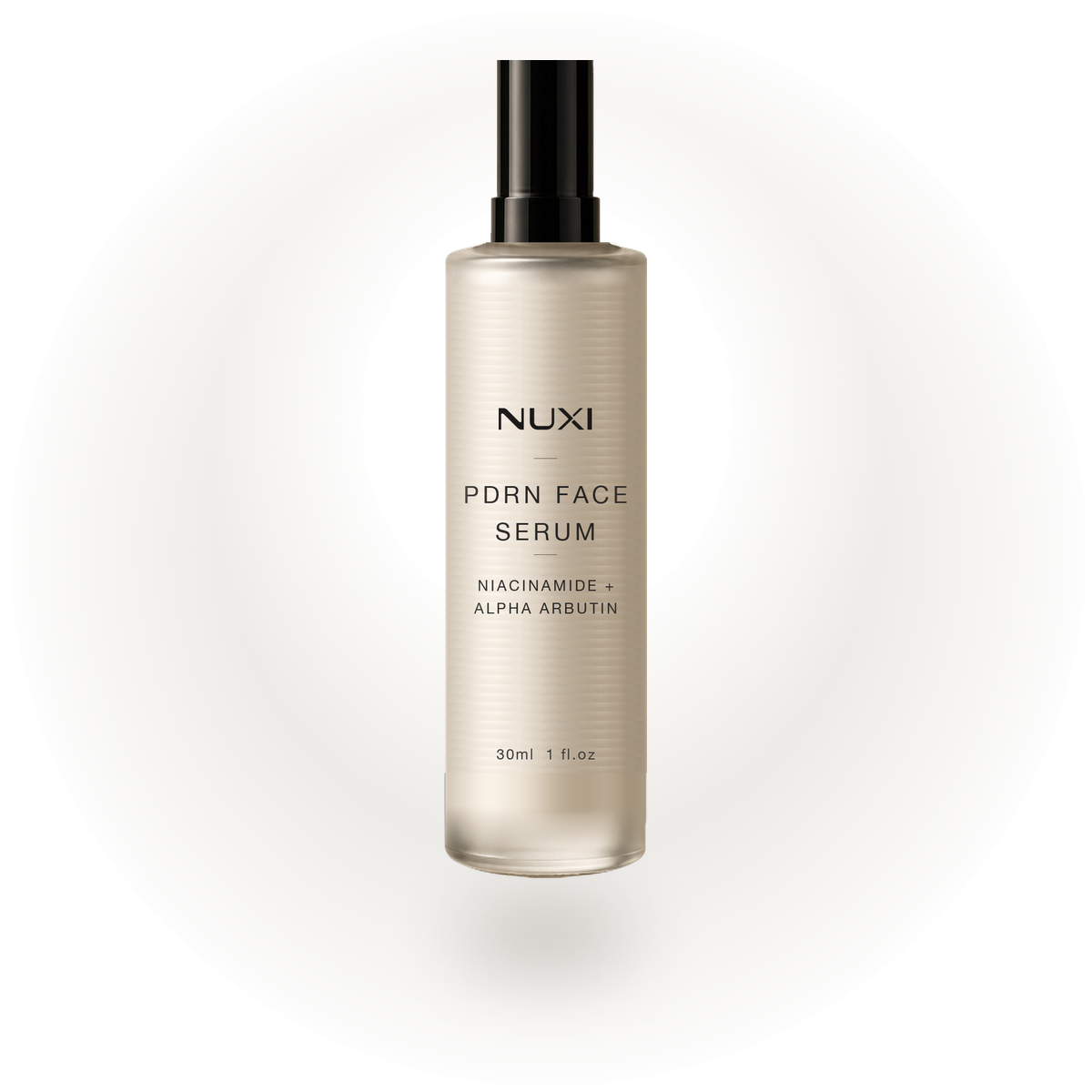
PDRN Face Serum
- Cash on delivery
- Easy replacement within 7 days
- WhatsApp support
What’s inside
Four actives, each with one job. Open any of them.
-
Polynucleotide fragments, used in aesthetic medicine for tissue repair and increasingly in topicals. The premise is different from most brightening actives: rather than taking a layer off, it supports the repair the skin has already started. Slower to show, and far harder to undo.
-
Vitamin B3, and one of the best-documented ingredients in skincare — barrier function, oil regulation, uneven tone. Five per cent rather than ten, because ten is where flushing starts for a lot of people and the extra five buys very little.
-
A stable derivative that interrupts tyrosinase, the enzyme that drives melanin production. It works on excess pigment — marks, patches, the shadow left by a spot. It does not act on your baseline colour, and it is not meant to.
-
The salt of hyaluronic acid, at a molecular weight that sits in the skin rather than on it. It is here so the serum finishes soft instead of tight, which is the difference between a product you use nightly and one you abandon in a fortnight.
How to use
-
Cleanse, then leave it damp
Not dry. A humectant serum on dry skin pulls water out of the skin instead of into it, which is how a hydrating product ends up feeling tight.
-
Three drops
Face and neck. Press it in rather than rubbing it around — there is no acid in it, so there is nothing to work into the skin.
-
Moisturiser straight over the top
While the serum is still damp. That is what seals the water in; without it the hyaluronate has nothing to hold on to.
-
Every night
And sunscreen every morning. That second half is not optional — pigment work without sun protection is a tap running into an open drain.
Not the same night as a retinoid. If you already use one, alternate nights rather than layering — nothing in this bottle needs to fight for the same skin.
What to expect
-
Weeks 1–2
It stops stinging
The barrier closes before anything else changes. If your skin has been reacting to everything, this is the first thing you notice.
-
Weeks 2–4
Texture and redness
Smoother under the fingers, calmer in the mirror.
-
Weeks 4–8
The newest marks
Recent spots fade first. Older pigment takes considerably longer and some of it will not go.
-
Weeks 8–12
Even tone
One colour rather than a map. This is the point at which other people notice rather than you.
-
Beyond that
The honest limit
Not a skin lightener, not a treatment for active acne, and not a substitute for sunscreen — without which none of the above holds.
It will not change the skin you were born with. It repairs what happened to it.
What hydroquinone asks of you
Hydroquinone is the prescription route for pigment. It is a short course with a risk profile you have to manage. Here is what that means, and what this does not ask.
| Criterion | NUXI SerumThis page | Hydroquinone 4%Prescription cream |
|---|---|---|
| Prescription | Not needed. | Prescription-only in India. |
| How long you use it | Every night, indefinitely. | Three months, then a break. |
| Ochronosis | None. | Blue-grey staining with long use. |
| Irritation | No acids, no retinol. | Common, and worse at four per cent. |
| When you stop | Nothing to come off. | Pigment can return darker. |
| Sun | Sunscreen as usual. | Non-negotiable — treated skin burns. |
Hydroquinone is a supervised course with an exit plan. This is a nightly serum with nothing to come off and nothing to manage. If a dermatologist already has you on a course, finish it — this is not a substitute for one, and it is not a skin lightener.
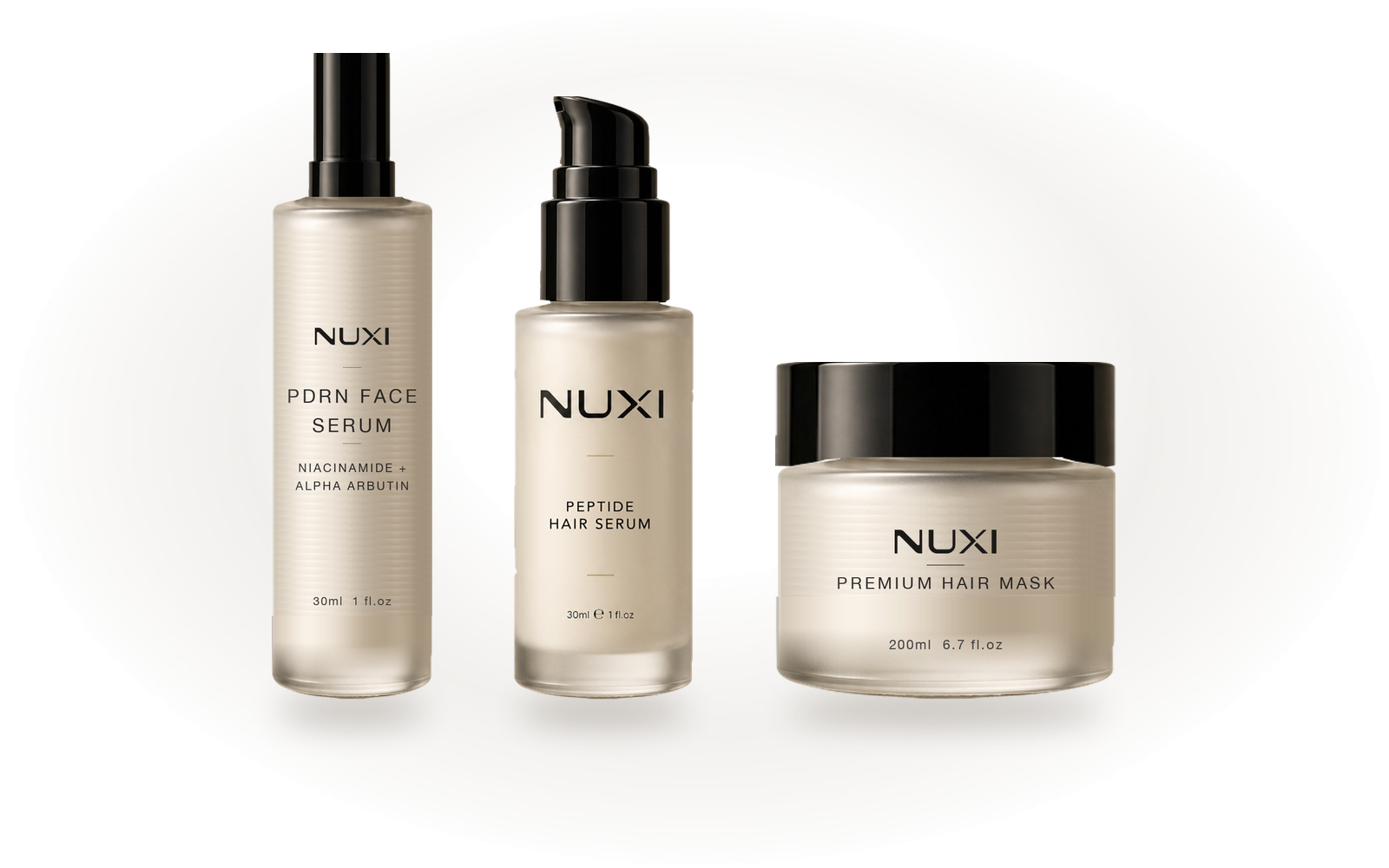
The Full Glow Up Kit
All three formulas, one cycle. Serum for the follicle, mask for the strand, PDRN for the face.
₹2,399₹2,897Save ₹498